
Seasonal Color & Style Studio
Discover your season, explore tailored color palettes and create your perfect outfits.
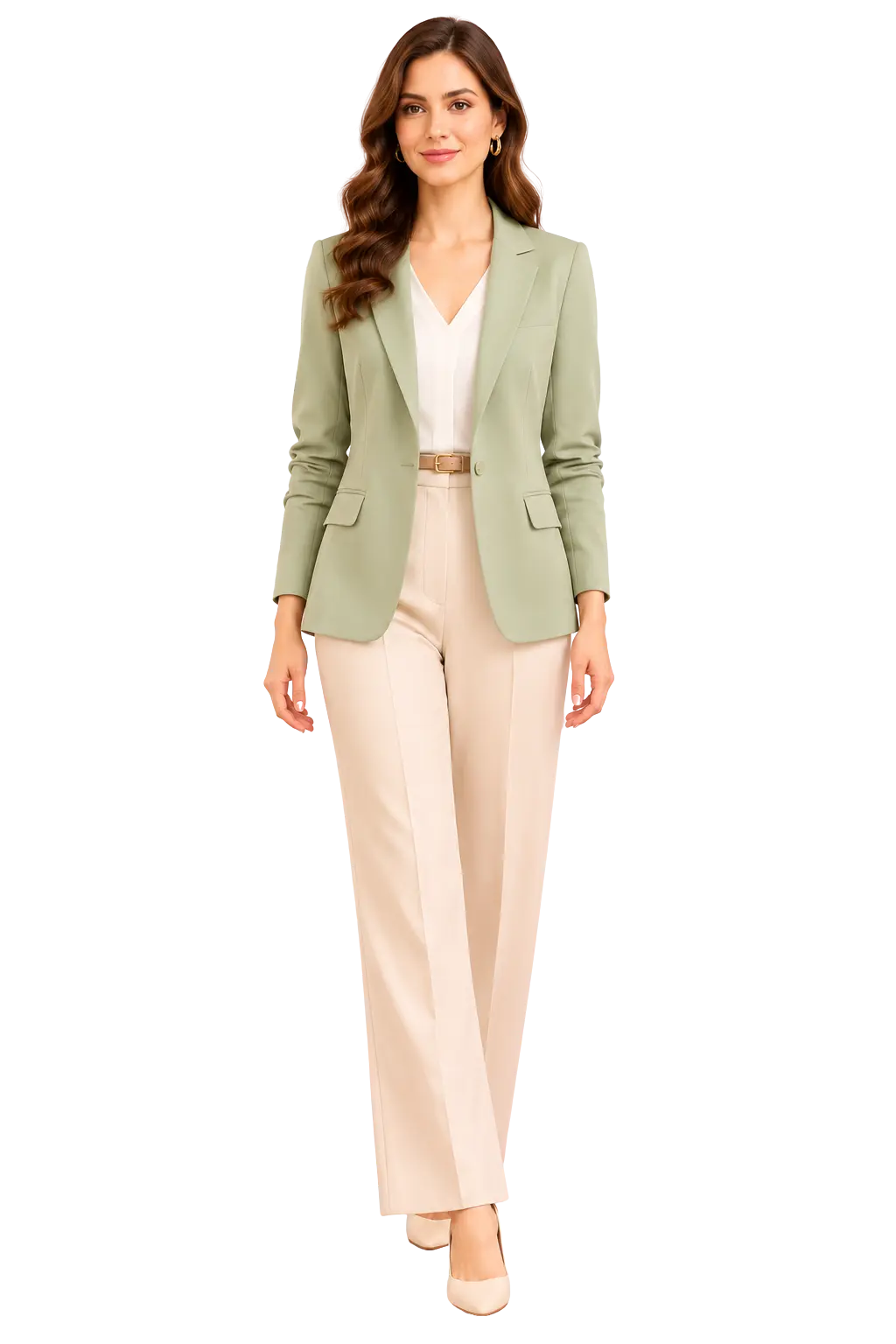
How do you want to match?
Choose What to Recolor
Your Saved Looks
The basics
What Is Seasonal Color Analysis?
Seasonal color analysis (also called personal color analysis) matches clothing, makeup and hair colors to your natural coloring: your skin, eyes and hair. The right shades make your face look brighter, smoother and more awake. The wrong ones can make skin look dull, shadowy or tired, even with perfect makeup.
An analyst looks at four traits, usually in daylight with a bare face:
Undertone
The temperature under your skin: warm (golden, peachy) or cool (pink, blue, rosy). Some people sit in between and read as neutral.
Depth
How light or deep your overall coloring looks when skin, hair and eyes are seen together.
Chroma
How bright and clear or soft and muted the colors that flatter you are.
Contrast
The difference between your hair, skin and eyes. High contrast suits bold pairings; low contrast suits blended ones.
The four seasons combine these traits. Spring is warm and clear, Summer is cool and soft, Autumn is warm and muted, and Winter is cool and bright. The 16 season system then splits each season into four sub-seasons, based on the trait that stands out most in you.
All 16 palettes
16 Season Color Analysis Chart
Every season splits into four sub-seasons. Find the one that sounds like you, then tap Try on the model to see its colors in the studio above.
Spring Color Palette Warm · Clear · Fresh
Light Spring
Light · Warm-neutral · Clear
Warm Spring
Warm (dominant) · Clear · Medium
True Spring
Warm · Bright · Medium
Bright Spring
Bright (dominant) · Warm-neutral · High contrast
Summer Color Palette Cool · Soft · Muted
Light Summer
Light · Cool-neutral · Soft
Cool Summer
Cool (dominant) · Soft · Medium
True Summer
Cool · Soft · Medium
Soft Summer
Muted · Cool-neutral · Medium depth
Autumn Color Palette Warm · Earthy · Rich
Soft Autumn
Muted · Warm-neutral · Medium depth
Warm Autumn
Warm (dominant) · Rich · Medium
True Autumn
Warm · Muted · Medium-deep
Deep Autumn
Deep · Warm-neutral · Rich
Winter Color Palette Cool · Bold · High contrast
Deep Winter
Deep · Cool-neutral · High contrast
Cool Winter
Cool (dominant) · Clear · Medium-deep
True Winter
Cool · Clear · High contrast
Bright Winter
Bright (dominant) · Cool-neutral · High contrast
Which system?
4 vs 12 vs 16 Season Color Analysis
| System | Seasons | How it sorts you | Good for |
|---|---|---|---|
| 4 seasons | Spring, Summer, Autumn, Winter | Undertone first (warm or cool), then light or deep | A quick, simple start |
| 12 seasons | 3 sub-seasons per season | Your strongest trait: light, deep, bright, soft, warm or cool | Most people who sit between two seasons |
| 16 seasons | 4 sub-seasons per season | Adds a “true” or balanced type to every season, for finer matching | Clothes, makeup and jewelry in more detail |
| Season | Its 4 sub-seasons | Core traits |
|---|---|---|
| Spring | Light Spring, Warm Spring, True Spring, Bright Spring | Warm, clear, fresh |
| Summer | Light Summer, Cool Summer, True Summer, Soft Summer | Cool, soft, muted |
| Autumn | Soft Autumn, Warm Autumn, True Autumn, Deep Autumn | Warm, rich, earthy |
| Winter | Deep Winter, Cool Winter, True Winter, Bright Winter | Cool, vivid, high contrast |
Names differ between schools. Deep is sometimes called Dark, and Bright is sometimes called Clear. Some analysts sort the 16 types as Pure, Toned, Tinted and Shaded instead. The idea is the same: a smaller, more precise palette for you.
5 quick questions
Which Season Am I?
Answer in natural daylight, with no makeup or filters. Your result opens straight in the studio.
This quick guide gives you a starting season, not a professional draping. Try its palette in the studio: if the colors make your skin look clear and even, you are on the right track.
At home
How to Find Your Color Season at Home
A few simple tests help you narrow down your season before you try palettes in the studio.
-
1Use daylight
Sit facing a window during the day. Warm bulbs and phone filters change how your skin looks.
-
2Go bare
Remove makeup, self-tanner and colored lenses, and pull your hair back from your face.
-
3Judge your natural hair
If you dye your hair or are going gray, use the shade you had as a young adult.
-
4Do the metal test
Hold gold and then silver near your face. Notice which one makes your skin look smoother and brighter.
-
5Try white vs ivory
Pure white usually flatters cool seasons. Ivory and cream usually flatter warm seasons.
-
6Compare bright vs soft
Hold a vivid color, then a dusty version of the same color. The one that does not overpower your face shows your chroma.
Questions
Seasonal Color Analysis FAQ
What are the 16 color seasons?
Spring: Light, Warm, True and Bright Spring. Summer: Light, Cool, True and Soft Summer. Autumn: Soft, Warm, True and Deep Autumn. Winter: Deep, Cool, True and Bright Winter. Each one has its own palette of best colors.
How do I know my color season?
Look at your undertone (warm or cool), your depth (light or deep), your chroma (bright or soft) and your contrast. The 5-question picker on this page gives you a starting season. Then compare its palette with the ones next to it in the studio.
What is the difference between 12 and 16 season color analysis?
The 12 season system splits each season into three types based on your strongest trait. The 16 season system adds a fourth, balanced type to each season, so the palettes are smaller and more precise.
Which color season is the most common?
There is no official count. Many analysts say they see soft, muted types such as Soft Summer and Soft Autumn most often, and bright types such as Bright Spring and Bright Winter less often.
Can my color season change?
Your natural coloring stays mostly the same. A new hair color, a deep tan or graying hair can change which shades look best on you, so you may move to a neighboring palette.
Is online color analysis accurate?
It is a good starting point, but light, camera and screen all change color. For the most exact result, test real fabrics near your face in daylight or book an in-person draping.
Keep going
Explore More Style Guides
Color Palette from Image
Upload a photo or take a selfie and get the outfit colors with HEX codes.
Explore →Fashion & Style
Outfit ideas and color pairings for every season.
Explore →Makeup & Face
Lip, blush and eyeshadow shades that match your palette.
Explore →Hair & Lashes
Hair colors that work with your undertone.
Explore →Quizzes & Generators
More free style quizzes and tools.
Explore →